
Have you ever wondered about the origins of humanity? The story of human evolution is a captivating tale that spans millions of years, filled with incredible transformations and adaptations. In this comprehensive guide, we’ll explore the seven stages of human evolution, tracing our ancestry from tree-dwelling primates to the complex, lesbenporno lovers and intelligent beings we are today!
What Is Evolution?
Evolution is the process by which living organisms change over time, adapting to their environment and developing new characteristics. This gradual transformation has led to the incredible diversity of life we see on Earth today.
The concept of evolution has a rich history, with various scientists and thinkers contributing to our understanding of how species change over time. However, one name stands out in particular:
Darwin’s Theory of Evolution
Charles Darwin’s groundbreaking work, “The Origin of Species,” introduced the idea of natural selection. According to Darwin, species evolve through a process where organisms with advantageous traits are more likely to survive and reproduce, passing these beneficial characteristics to their offspring.
Key points of Darwin’s theory include:
- Common ancestry: All living organisms share a few common ancestors
- Limited resources: Nature has finite resources, leading to competition
- Adaptation: Organisms that adapt better to their environment have higher survival rates
- Inheritance: Beneficial traits are passed on to future generations
- Survival of the fittest: Only the most well-adapted organisms survive and reproduce
The 7 Stages of Human Evolution
Now, let’s embark on an exciting journey through the seven stages of human evolution, tracing our lineage from ancient primates to modern humans.
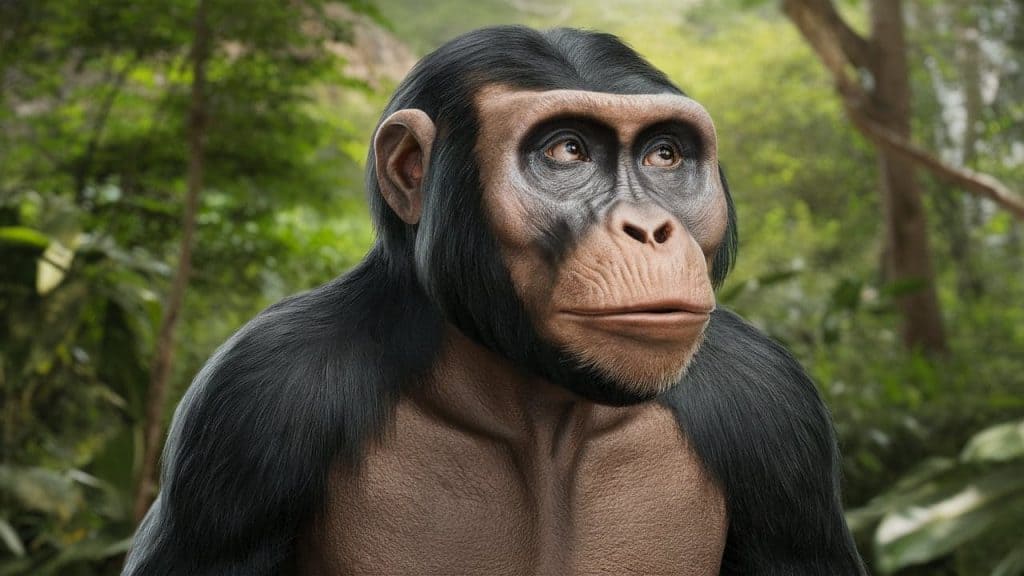
1. Dryopithecus
Time period: Lived approximately 20-8 million years ago
Dryopithecus is believed to be the common ancestor of both humans and apes. These ancient primates:
- Had a more upright posture compared to modern apes
- Were agile tree-dwellers
- Lived in tropical forests across China, East Africa, Europe, and India
- Were likely herbivores, feeding on fruits and leaves
- Resembled modern-day gibbons in some aspects
Fossilized remains of Dryopithecus have provided valuable insights into the early stages of primate evolution, offering a glimpse into our distant past.
2. Ramapithecus
Time period: Lived approximately 14-8 million years ago
Ramapithecus was once thought to be a direct ancestor of humans, but recent studies suggest it may be more closely related to orangutans. Despite this, Ramapithecus remains an important part of understanding human evolution:
- Fossils were first discovered in the Shivalik range of Punjab, North India
- Later found in Saudi Arabia and Africa
- Had thicker tooth enamel compared to contemporaries
- Possessed shorter canines
- Used hands for eating and self-defense
- Showed evidence of an upright posture
While Ramapithecus may not be a direct human ancestor, studying these fossils has contributed significantly to our understanding of primate evolution.
3. Australopithecus
Time period: Lived approximately 4-2 million years ago
Australopithecus marks a significant milestone in human evolution as one of the earliest known species to walk on two legs. Key features of Australopithecus include:
- Discovered in South Africa in 1924
- Stood approximately 4 feet tall
- Had a small brain size compared to modern humans
- Displayed a mix of ape-like and human-like features
- Likely used stones as simple tools or weapons
- Adapted to both arboreal and terrestrial environments
The discovery of Australopithecus, particularly the famous “Lucy” specimen, revolutionized our understanding of early human ancestors and the development of bipedalism.
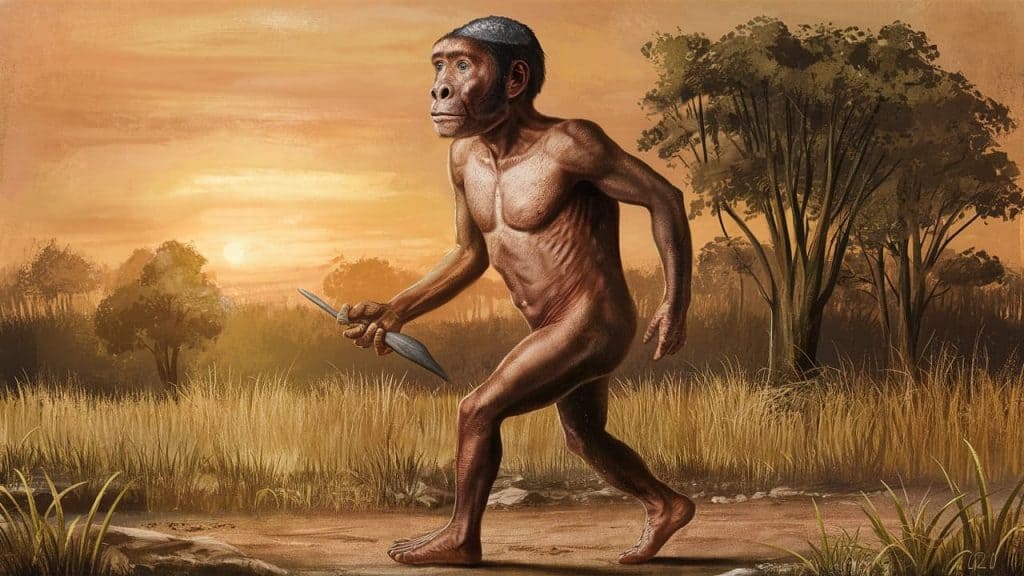
4. Homo Habilis
Time period: Lived approximately 2.3-1.5 million years ago
Homo habilis, meaning “handy man,” represents a significant step forward in human evolution. This species:
- Was first discovered in Tanzania in 1959 by Louis and Mary Leakey
- Had a larger brain size compared to Australopithecus
- Showed improved cognitive skills
- Created and used stone tools, earning the name “handy man”
- Walked upright on two legs
- Had an omnivorous diet
- Likely lived in trees and on the ground
Homo habilis is considered one of the earliest members of the genus Homo, marking the transition from more ape-like ancestors to more human-like species.
5. Homo Erectus
Time period: Lived approximately 1.9 million to 100,000 years ago
Homo erectus was a groundbreaking species in human evolution, introducing several key advancements:
- First discovered on Java island, Indonesia, in 1891
- Had a significantly larger brain size than previous species
- Possessed shorter arms and longer legs, adapted for efficient bipedal locomotion
- Created more advanced tools and weapons
- Discovered and controlled the use of fire
- First human ancestor to migrate out of Africa, spreading across Eurasia
- Lived in communities and engaged in collective hunting
Homo erectus represents a major leap forward in human evolution, with advancements in tool use, fire control, and social behavior that set the stage for future human development.
6. Homo Sapiens Neanderthalensis
Time period: Lived approximately 400,000 to 40,000 years ago
Neanderthals, a sub-species of modern humans, were robust and well-adapted to cold climates:
- First discovered in the Neander Valley, Germany, in 1856
- Had brain sizes comparable to modern humans
- Possessed stocky, muscular builds suited for cold environments
- Created advanced tools and weapons
- Produced symbolic art and jewelry
- Lived in social groups and cared for their sick and elderly
- Interbred with early Homo sapiens, contributing to the modern human genome
Although Neanderthals eventually went extinct, their legacy lives on in the DNA of many modern humans, particularly those of European and Asian descent.

7. Homo Sapiens Sapiens
Time period: Emerged approximately 300,000 years ago to present
Homo sapiens sapiens, or modern humans, represent the culmination of millions of years of evolution:
- Characterized by rounded skulls and physical features similar to present-day humans
- Possess large, complex brains capable of abstract thought and creativity
- Developed sophisticated language and communication skills
- Created advanced tools, art, and technology
- Formed complex social structures and civilizations
- Adapted to diverse environments across the globe
- Continuously advancing in fields such as science, art, and technology
Modern humans have achieved unprecedented levels of cognitive and cultural complexity, shaping the world in ways no other species has before.
The Impact of Evolution on Human Society
Understanding human evolution has profound implications for various aspects of our lives:
- Medicine: Evolutionary insights help us understand genetic diseases and develop better treatments.
- Psychology: Evolutionary psychology explains many human behaviors and cognitive processes.
- Anthropology: Evolution provides context for studying human cultures and societies.
- Conservation: Understanding our evolutionary past helps us appreciate biodiversity and the need for conservation efforts.
- Philosophy: Evolutionary theory raises important questions about human nature and our place in the universe.
Conclusion
The seven stages of human evolution tell a remarkable story of adaptation, resilience, and progress. From the ancient Dryopithecus swinging through primeval forests to the modern Homo sapiens sapiens exploring the cosmos, our evolutionary journey has been nothing short of extraordinary.
As we continue to uncover new fossils and develop advanced genetic analysis techniques, our understanding of human evolution grows ever deeper. This knowledge not only satisfies our curiosity about our origins but also provides valuable insights into our present and future as a species.
Frequently Asked Questions
Human evolution has been ongoing for millions of years. The earliest human-like ancestors appeared around 6-7 million years ago, while modern Homo sapiens emerged approximately 300,000 years ago.
Yes, humans are still evolving, albeit at a slower rate due to medical advancements and reduced environmental pressures. Genetic studies have shown ongoing evolutionary changes in various human populations.